
"Central America coffee market"
2000 article(s) found

Introduction of Nicaraguan Coffee Flavor in Central America lemon tree manor in Nicaraguan coffee producing area
In many countries, coffee production will be seriously affected for political reasons. Nicaraguan coffee industry is no exception. The 1979 revolution forced coffee planters to flee to Miami. A period of indecision followed, when the government considered whether to redistribute land (including many plantations), which led to a shortage of coffee and a decline in production, up from 1 in the early 1970s.

What are the main coffee producing areas? where is the origin of famous coffee?
Coffee comes from coffee beans, which are harvested and processed from the fruit of trees. Coffee trees grow at the center of the equator, between latitudes of 25 degrees south and north, and are called the homes of tropical or subtropical countries called coffee belts. At present, there are about 60 coffee-producing countries. Coffee is produced in South America, Central America, the West Indies, Asia, Africa, Arabia, the South Pacific and

Mellow Nicaraguan Coffee introduces Los Congo Village in Central Central America in Matagalpa
When tasting Nicaraguan coffee, it is best to drink cold water first, so that you can better feel its mellow taste. Drink coffee while it is hot, because the tannins in Nicaraguan coffee are easy to change during cooling, and the taste becomes sour, which will affect the flavor of the coffee. You can add the right amount of sugar, and then add cream. Enjoy a cup of high quality Niga

Introduction to the varieties of El Salvador Coffee beans treated by Grinding scale
El Salvador (ElSalvador) is one of the small countries in Central America, where coffee is light, fragrant, pure, slightly sour and characterized by excellent balance of flavor. It is a specialty of Central America. With sour, bitter, sweet and other taste characteristics, the best baking degree is moderate, deep. Salvadoran Coffee-Coffee originated in the early 1990s, guerrilla warfare greatly damaged the country's national economy.

Flavor description of Costa Rican (Caturra) Kaddura coffee beans taste treatment grinding degree
Flavor description of Costa Rican (Caturra) Kaddura coffee beans there is a famous Tarrazu, also known as Tarasu, which stands out among the many excellent producing areas in Costa Rica. Tarazhu is very famous in the world of boutique coffee and is one of the major coffee producing areas in the world. In the 2014 COE competition, of the 23 beans on the list, 17 came soon.

Introduction of six coffee producing areas in Honduras in northern Central America
There are six main coffee producing areas in Honduras, including Santa Barbara, Copan, Ocotepeque, Lempira, La Paz and El Paraiso in the southeast. Honduran coffee tastes less acidic, while caramel is more sweet. The taste of coffee from these five different producing areas is also slightly different, some slightly sour.

The origin and suitable roasting degree of boutique coffee
At present, there are so many kinds of coffee beans imported from all over the world that there is no choice. Here we will introduce the main producing areas and the characteristics of coffee beans as a reference for the selection and purchase of coffee. ■ Brazil (South America), the largest coffee producer, accounts for 1/3 of the global consumption of coffee of all grades and types, and has a place in the global coffee market, although Brazil faces

Flavor and taste characteristics of Honduran coffee beans, the most popular coffee brand in Central and South America
What makes coffee in Honduras special? You know, there are countless excellent coffees in Central and South America. Why do Colombian coffee and Brazilian coffee stand out from the crowd? Let's take a look at the uniqueness of Honduran coffee on Qianjie today. The most luxuriant and purest coffee growing place in the region: unfortunately, the United States

A brief introduction to the planting Market Price of Velvet-like Fine Coffee beans in Guatemala
Guatemala is located in the center of North and South America, and its geographical location occupies an important position in Central America. Guatemala covers an area of about 108899 square kilometers. The land features can be divided into plateau volcanoes, lowland tropical forests, volcanic sandy shore plains along the Pacific coast, and virgin lands along the Caribbean Sea. The SierraMadre Mountains of Central America span east and west of Guatemala, covering an area of

A brief introduction to the market price of high-quality Guatemalan coffee beans with rich taste
Guatemala is located in the center of North and South America, and its geographical location occupies an important position in Central America. Guatemala covers an area of about 108899 square kilometers. The land features can be divided into plateau volcanoes, lowland tropical forests, volcanic sandy shore plains along the Pacific coast, and virgin lands along the Caribbean Sea. The SierraMadre Mountains of Central America span east and west of Guatemala, covering an area of

A big country of fine coffee in southern Central America-- an introduction to the origin of fine coffee in Costa Rica and Central America
Guide to Caxiang: I haven't told you about the country where coffee is produced for a long time. Let's take a look at the coffee cultivation in Costa Rica today. The editor has something to say: Costa Rica first entered the editor's eyes when he did not know which year's World Cup, Costa Rica played against China, and then. China lost. Costa Rican coffee cultivation was introduced from Cuba in 1779 and only in 1820.
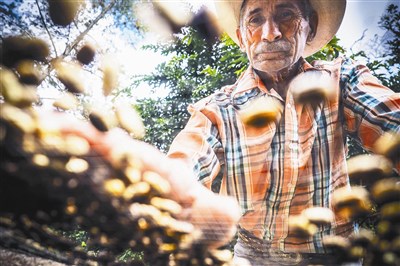
Comment on Nicaraguan Coffee Flavor Central American Coffee beans from Central America
Nicaraguan coffee Nicaragua coffee flavor characteristics: moderate acidity, fragrant and delicious. Nicaraguan coffee of high quality is in the forefront of coffee beans in the world and enjoys a good reputation. Its particles are moderate in size, mild in taste and very aromatic and mellow. Nicaragua is located in central Central America, bordered by the Pacific Ocean to the west and the Caribbean Sea to the east. The highlands in the north and the coastal plains in the east

A brief introduction to the description of the flavor, taste and aroma characteristics of fine coffee beans in Mercedes Manor
Superior quality beans: El Salvador SHB taste characteristics: sour, bitter, sweet mild and moderate. El Salvador (ElSalvador) is one of the small countries in Central America, where coffee is light, fragrant, pure, slightly sour and characterized by excellent balance of flavor. It is a specialty of Central America. With sour, bitter, sweet and other taste characteristics, the best baking degree is moderate, deep. Guerrilla warfare in the early 1990s

The secret of the long-term success of the St. Vincent processing plant in Honduras, the first largest coffee producer in Central America.
Professional barista exchanges please follow the coffee workshop (Wechat official account cafe_style) St. Vincent processing plant (Beneficio San Vicente) one of the ancient classic processing plants in Honduras St. Vincent (San Vicente) is a family-run processing plant, very famous locally, St. Vincent processing plant as the gatekeeper, to improve the quality of coffee beans! Provide technological upgrading for producers

A brief introduction to the Market Price of Fine Coffee Bean varieties in Guatemala with Fine sour Taste
Guatemala is located in the center of North and South America, and its geographical location occupies an important position in Central America. Guatemala covers an area of about 108899 square kilometers. The land features can be divided into plateau volcanoes, lowland tropical forests, volcanic sandy shore plains along the Pacific coast, and virgin lands along the Caribbean Sea. The SierraMadre Mountains of Central America span east and west of Guatemala, covering an area of

A brief introduction to the Market Price of Fine Coffee Bean varieties in the fragrant Goddess Manor
Costa Rican coffee is produced in the Republic of Costa Rica (The Republic of Coffee) in the south of Central America. Its quality is similar to that of Colombian coffee and is suitable for blending mixed coffee. Costa Rican coffee has full particles, ideal acidity and unique strong flavor. High-quality Costa Rican coffee is called extra hard beans, and this kind of coffee can grow at an altitude of more than 1500 meters.

El Salvador Coffee Bean
El Salvador is one of the small countries in Central America, where coffee is light, aromatic, pure, slightly acidic, and the flavor characteristics are excellent balance, which is a specialty of Central America. It has sour, bitter and sweet taste characteristics, and the best baking degree is moderate and deep. In the early 1990s, guerrilla warfare greatly damaged the country's national economy, reducing coffee production from 70 years.

Nicaragua, the poorest coffee-producing country in Central America, the flavor and taste manor of the coffee-producing area introduces Happy Village.
Nicaragua is now one of the poorest countries in Central America. Due to its poor economic foundation, the coffee industry is still relatively backward, while coffee farmers are in extreme poverty. Fortunately, Nicaraguan coffee has received some foreign aid funds to improve the quality of its coffee. Coffee from Madagelba, Sinodega and Segovia in Nicaragua

A brief introduction to the main coffee producing areas in Central America and their well-known representative coffee flavor characteristics
For the exchange of professional baristas, please follow the coffee workshop (Wechat official account cafe_style) Guatemala (Guatemala) well-known representative coffee: Antigua (Antigua), Vivette Nango (Huehuetenango) Guatemala's latitude is about 15 degrees, the left is adjacent to the Pacific Ocean, the right is the Caribbean Sea. The Sierra Mountains on this side of the Pacific Ocean are the main sources of Guatemalan coffee.

Shallow sour Niagara Lakadura boutique coffee beans grinding degree baking degree treatment method simple
The coffee produced in Nicaragua's Madagelba, Sinodega and Segovia is highly respected by coffee lovers all over the world. In particular, the coffee produced in the Madaguelba region will be seriously affected in many countries due to political reasons. Nicaraguan coffee industry is no exception. The 1979 revolution forced coffee planters to flee to Miami. This is followed by a piece of chess